

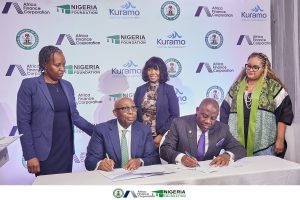

On Monday, January 26th 2026, a significant milestone in the evolution of Nigeria’s higher education system was marked with the official launch of the National University Advancement Program (NUAP). Convened by the Federal Ministry of Education Nigeria, the high-level event brought together vice-chancellors, pro-chancellors, policymakers, advancement professionals, and corporate leaders from across the country.
The program was delivered by the Nigeria Higher Education Foundation in collaboration with the Africa Finance Corporation, bringing together key stakeholders from across Nigeria’s higher education ecosystem.
Held at the Federal Palace Hotel & Casino, the event was themed “Harnessing the Single Largest Asset of Universities: Alumni,” setting the tone for a transformative shift in how Nigerian universities engage their alumni and secure sustainable funding.
A Call to Leadership and Long-Term Vision
In his keynote address, the Honourable Minister of Education, Dr. Maruf Tunji Alausa, charged Vice-Chancellors to take full ownership of the program and embed advancement as a core institutional priority.
He emphasized that NUAP is not a one-off initiative but the beginning of a national transformation journey, urging university leadership to adopt a long-term perspective in building financially resilient and globally competitive institutions.
According to the Minister, Nigerian universities face mounting challenges; limited public funding, rising enrolment, ageing infrastructure, and increasing demands for research and innovation. He noted that these realities make it imperative to shift towards sustainable funding models driven by alumni engagement, philanthropy, endowments, and private sector partnerships.
Building Sustainable Institutions Through Advancement
The NUAP is designed to establish a coordinated, nationwide framework for university advancement across federal institutions. Key objectives include:
- Institutionalizing professionally managed Advancement Offices
- Strengthening capacity in alumni relations, fundraising, and donor stewardship
- Developing sustainable funding structures to support scholarships, research, and infrastructure
- Embedding transparency, accountability, and long-term financial planning
A Defining Moment for Higher Education
In his welcome remarks, Wale Adeosun, Chairman of the Nigeria Higher Education Foundation, described the launch as a defining moment in Nigeria’s higher education journey.
Global Perspectives, Local Impact
Also speaking at the event, Samaila Zubairu, President and CEO of the Africa Finance Corporation, underscored the importance of structured advancement systems.
Drawing from global best practices, he noted that leading universities sustain excellence through strong alumni networks, philanthropic giving, and strategic partnerships. He described NUAP as a platform that enables these practices to take root in Nigeria in a coordinated and impactful way.
“This is not charity; it is nation-building,” he stated.
Looking Ahead
Participants widely described NUAP as a structural shift, one that moves universities from informal alumni engagement to institutionalized, professionally managed advancement systems capable of mobilizing long-term resources.
As the program begins nationwide implementation, the Federal Ministry of Education Nigeria has reaffirmed its commitment to providing the policy direction, coordination, and leadership required for success.
Conclusion
The launch of the National University Advancement Program marks the beginning of a bold new chapter, one that places alumni, partnerships, and advancement at the centre of building resilient, future-ready universities.
With shared responsibility and purposeful collaboration, Nigeria is taking a decisive step toward creating a higher education system that is sustainable, globally competitive, and responsive to the aspirations of its people.
………………………………………………………………………..………………………………………………………………………..
About the NHEF
The Nigeria Higher Education Foundation (NHEF) was established in 2004 with support from the John D. and Catherine T. MacArthur Foundation. Since then, the NHEF has been committed to enhancing the capacity of higher education institutions in Nigeria by strengthening advancement structures, empowering students and young professionals, and cultivating alumni networks as long-term partners in institutional growth. Over the past 21 years, the NHEF has trained thousands of students, young professionals, faculty, and university leaders while fostering global partnerships to support Nigeria’s higher education sector. For more information, visit www.thenhef.org.